A
Adam Metauro
Guest
- Thread Author
- #1
Can you stay in home during mold remediation? Sometimes, but there is no safe yes-or-no answer for every property. The decision depends on the size and location of the affected area, how the work will be contained, who lives in the home, and what the written work plan requires. Before work begins, ask the remediation contractor to explain the boundaries, access limits, and steps that will protect people outside the work zone.
Contact iMold to discuss your property
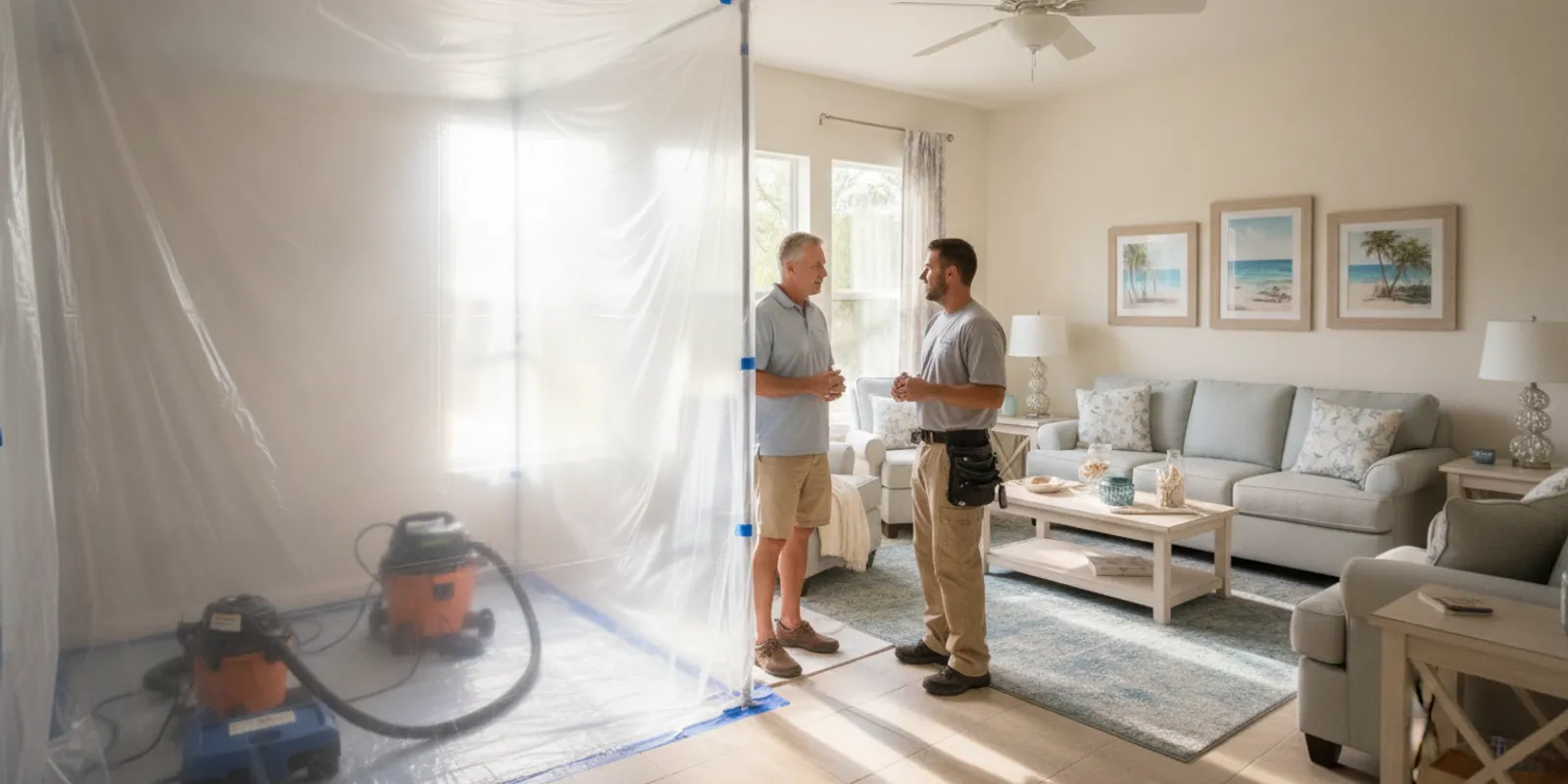
Occupancy is a project-specific decision. A small, isolated work area with effective containment may allow residents to use other parts of a home. Work that affects several rooms, shared air pathways, or essential spaces can make staying impractical. The contractor should assess the actual conditions and explain how the work area relates to the rest of the property.
Ask for an explanation of the remediation plan in plain language. It should tell you which rooms are included, what will be sealed or restricted, how workers enter and leave, how materials are handled, and what needs to happen before the area is reopened. If the plan changes after work starts, ask what changed and whether the household’s arrangements should change too. A clear restoration process helps everyone understand the next step rather than relying on assumptions.
Consider the practical details as well as the visible work. Does the affected area include a bedroom, kitchen, bathroom, or the only route to an exit? Will you need to pass close to the work zone? Can doors and barriers stay closed? Are there children, older adults, or people with health concerns in the household? These points do not automatically determine the answer, but they belong in the conversation before the crew begins.
Containment is used to separate the work area from surrounding spaces and manage dust and debris during the project. The setup depends on the scope and property. Ask the contractor to point out the boundaries, explain which areas are off limits, and describe how occupants should avoid disturbing the barriers. Do not open a sealed entry, move materials, or enter the work zone unless the project team says it is safe to do so.
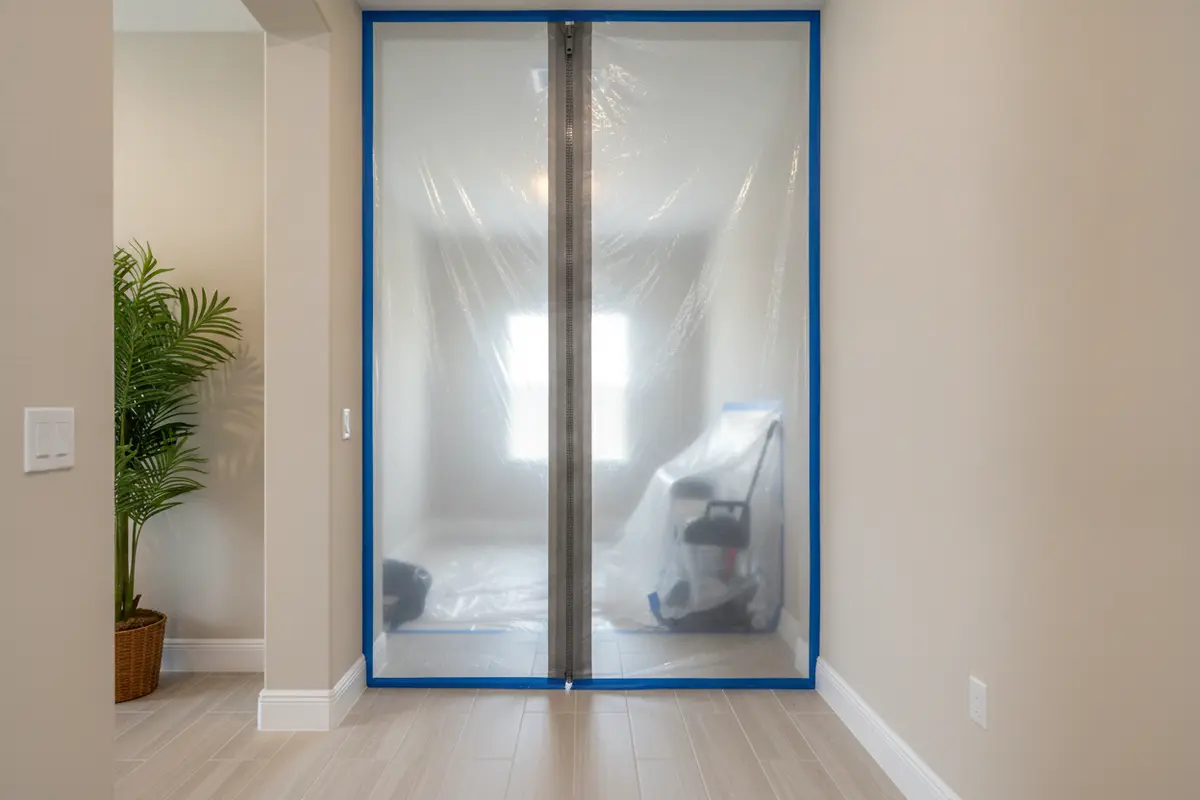
Containment can be affected by the home’s layout, the location of the damage, and the work being performed. A hallway, doorway, or shared living space can complicate movement even if the affected material is limited. Ask whether the crew needs to reach the work area through the rooms you plan to use, and whether the plan accounts for that route.
Do not judge safety only by whether you can see mold or smell an odor. Those observations do not tell you everything about a work zone or its controls. Likewise, a barrier is not a reason to assume that every adjacent space is automatically suitable for normal use. The contractor should explain the actual setup, its limits, and any instructions for occupants.
The location matters as much as the amount of affected material. Work in an unused storage area may create fewer day-to-day disruptions than work in a bedroom or near the home’s main entrance. A project involving several connected spaces can also limit access to rooms residents rely on. These examples are not a substitute for an assessment; they show why broad assurances are less useful than a room-by-room discussion.
Ask whether the work area can be kept separate from occupied rooms, whether the household can use necessary facilities, and whether noise or equipment will affect sleeping and daily routines. If the project involves a shared building, rental property, or adjoining unit, clarify who controls access and how the work plan coordinates with other occupants or property management.
Remediation may also be one part of a larger response if moisture or water damage is involved. A contractor may need to address the moisture source and related damage, not only visible growth. A peer-reviewed analysis of mold contamination in homes discusses approaches involving building and housing codes and maintenance, reinforcing that mold concerns can involve broader property conditions as well as cleanup (research on regulating mold contamination in homes). iMold describes its mold remediation services and its water damage restoration work separately; ask which parts of your particular project are included and what is outside the scope.
Plan around the people who actually live in the home. Infants and children may need close supervision around barriers and equipment. Older adults or people with mobility needs may rely on a route that crosses the work zone. A household member with asthma, allergies, or another health concern may want to discuss the situation with a qualified health professional and make a conservative plan with the project team.
Pets need a practical plan, too. A closed barrier is not a substitute for keeping pets away from workers, equipment, and materials. Tell the contractor about pets and ask where they can safely stay during work and how to manage entrances and exits. If you have aquariums, specialized equipment, or other household needs, raise those details before the schedule is set.
When a health condition is part of the decision, a restoration professional can describe the work and controls, but cannot decide what is medically appropriate for an individual. Ask the person’s healthcare provider for advice about exposure or temporary relocation, and share relevant project information with them. If someone feels unwell, seek appropriate medical guidance rather than waiting for a project update.
Temporary relocation may be worth considering when the project affects essential rooms, when containment leaves too little usable space, or when occupants cannot reliably stay out of the work zone. It may also be the more workable option if a household member has a health concern that calls for extra caution, or if the crew cannot maintain an appropriate separation under the property’s conditions.
That does not mean every remediation project requires leaving. Ask the contractor to explain the options and the reasons for its recommendation. If the advice is to relocate, ask whether the recommendation applies to everyone, for what part of the project, and what specific milestone must be reached before returning. Request that the answer be documented with the rest of the project plan.
Insurance coverage for temporary housing depends on the policy, circumstances, and insurer’s decision. Do not assume lodging will be paid for or that remediation automatically qualifies. Review your policy, keep records of discussions and expenses, and ask your insurer what information it needs. iMold’s insurance claims information can help you identify questions to raise, but your insurer determines coverage under your policy.
A short conversation before the first day can prevent confusion. Use these questions to make the plan concrete:
Ask for answers that address your own layout, not only general practices. If the project includes inspection or testing, ask what the findings do and do not establish, and how they affect the scope. You can also review the company’s frequently asked questions and safety and preparedness information as preparation, then confirm details with the project team.

The options below are a planning aid, not a safety clearance. Your contractor’s site-specific instructions take priority, and a healthcare provider should advise on individual medical concerns.
When it may fit: The work zone is separated, the remaining rooms are usable, and residents can follow access instructions.
What to confirm: Approved rooms and routes, barrier locations, household needs, and what to do if conditions change.
When it may fit: Some rooms remain usable, but normal movement or access is restricted during the project.
What to confirm: Which rooms and facilities are available, how long restrictions may last, and how workers will reach the site.
When it may fit: Essential spaces are affected, separation is not practical, or household circumstances favor greater distance from the work.
What to confirm: Who should relocate, the relevant project milestone, personal costs, and any insurer documentation requirements.
Follow the project team’s instructions before moving belongings or changing the setup. Ask whether items need to be removed from the work area and who should handle them. Keep children and pets away from barriers and equipment. Do not store personal items against containment or use the work zone as a shortcut.
Agree on an everyday access plan. Identify the entrances residents will use, where to park if crew access is needed, how deliveries will be handled, and how to contact the project lead. If a usual route becomes unavailable, the household should know the alternative before work starts. Keep the contractor’s instructions easy to find and make sure everyone in the home understands them.
During the project, report a damaged barrier, unexpected access problem, or change in household circumstances promptly. Do not try to repair containment yourself or enter the work zone to inspect progress. Ask the team to explain what happened, whether it changes the plan, and what residents should do while it is addressed. A project-specific response is more reliable than guessing based on appearance.
Do not assume the area is ready because workers have left for the day or visible work appears complete. Ask what steps remain, who will tell you the area can be accessed, and whether any follow-up inspection or verification is part of the agreed scope. The answer depends on the project and should be clearly communicated by the contractor.
If a written plan includes defined completion steps, ask the project team to review them with you. Confirm whether barriers will be removed by the crew, whether any cleaning or repair work remains, and how the household should use the area afterward. If your insurer, property manager, or another professional is involved, coordinate any required approvals rather than assuming one party’s update covers everyone.
Good documentation makes the decision easier to revisit. Keep the scope, instructions, schedule updates, and relevant insurer communications together. For more information about iMold’s background and approach, see about iMold or learn about its emergency restoration services.
No single rule applies to every home. The need to leave depends on the work area, containment, access to essential rooms, household needs, and the contractor’s project-specific instructions.
Possibly, if the project team determines that other rooms can remain in use and explains the boundaries and routes residents must follow. Confirm the plan for your home rather than relying on a general answer.
Ask the contractor which items, if any, should be moved and who should handle them. Avoid entering the work area or shifting materials after containment is set up unless the team instructs you to do so.
Coverage depends on your policy, the cause of the loss, and the insurer’s review. Ask your insurer directly what may be covered and what documentation it needs before relying on reimbursement.
Before deciding whether to stay, ask for a walkthrough of the planned work area, the access restrictions, and the conditions for using the rest of the home. If the situation changes or the instructions are unclear, pause and contact the project team for direction.
Contact iMold about your mold remediation questions
A clear, property-specific plan helps your household make an informed decision about where to stay and what to expect while remediation is underway.
The post Can You Stay In Home During Mold Remediation: A Southwest Florida Response Guide appeared first on iMold.
Contact iMold to discuss your property
What determines whether you can remain at home?
Occupancy is a project-specific decision. A small, isolated work area with effective containment may allow residents to use other parts of a home. Work that affects several rooms, shared air pathways, or essential spaces can make staying impractical. The contractor should assess the actual conditions and explain how the work area relates to the rest of the property.
Ask for an explanation of the remediation plan in plain language. It should tell you which rooms are included, what will be sealed or restricted, how workers enter and leave, how materials are handled, and what needs to happen before the area is reopened. If the plan changes after work starts, ask what changed and whether the household’s arrangements should change too. A clear restoration process helps everyone understand the next step rather than relying on assumptions.
Consider the practical details as well as the visible work. Does the affected area include a bedroom, kitchen, bathroom, or the only route to an exit? Will you need to pass close to the work zone? Can doors and barriers stay closed? Are there children, older adults, or people with health concerns in the household? These points do not automatically determine the answer, but they belong in the conversation before the crew begins.
How does containment affect the decision?
Containment is used to separate the work area from surrounding spaces and manage dust and debris during the project. The setup depends on the scope and property. Ask the contractor to point out the boundaries, explain which areas are off limits, and describe how occupants should avoid disturbing the barriers. Do not open a sealed entry, move materials, or enter the work zone unless the project team says it is safe to do so.
Containment can be affected by the home’s layout, the location of the damage, and the work being performed. A hallway, doorway, or shared living space can complicate movement even if the affected material is limited. Ask whether the crew needs to reach the work area through the rooms you plan to use, and whether the plan accounts for that route.
Do not judge safety only by whether you can see mold or smell an odor. Those observations do not tell you everything about a work zone or its controls. Likewise, a barrier is not a reason to assume that every adjacent space is automatically suitable for normal use. The contractor should explain the actual setup, its limits, and any instructions for occupants.
What do the size and location of the work area mean?
The location matters as much as the amount of affected material. Work in an unused storage area may create fewer day-to-day disruptions than work in a bedroom or near the home’s main entrance. A project involving several connected spaces can also limit access to rooms residents rely on. These examples are not a substitute for an assessment; they show why broad assurances are less useful than a room-by-room discussion.
Ask whether the work area can be kept separate from occupied rooms, whether the household can use necessary facilities, and whether noise or equipment will affect sleeping and daily routines. If the project involves a shared building, rental property, or adjoining unit, clarify who controls access and how the work plan coordinates with other occupants or property management.
Remediation may also be one part of a larger response if moisture or water damage is involved. A contractor may need to address the moisture source and related damage, not only visible growth. A peer-reviewed analysis of mold contamination in homes discusses approaches involving building and housing codes and maintenance, reinforcing that mold concerns can involve broader property conditions as well as cleanup (research on regulating mold contamination in homes). iMold describes its mold remediation services and its water damage restoration work separately; ask which parts of your particular project are included and what is outside the scope.
Who in the household should be part of the decision?
Plan around the people who actually live in the home. Infants and children may need close supervision around barriers and equipment. Older adults or people with mobility needs may rely on a route that crosses the work zone. A household member with asthma, allergies, or another health concern may want to discuss the situation with a qualified health professional and make a conservative plan with the project team.
Pets need a practical plan, too. A closed barrier is not a substitute for keeping pets away from workers, equipment, and materials. Tell the contractor about pets and ask where they can safely stay during work and how to manage entrances and exits. If you have aquariums, specialized equipment, or other household needs, raise those details before the schedule is set.
When a health condition is part of the decision, a restoration professional can describe the work and controls, but cannot decide what is medically appropriate for an individual. Ask the person’s healthcare provider for advice about exposure or temporary relocation, and share relevant project information with them. If someone feels unwell, seek appropriate medical guidance rather than waiting for a project update.
When might it make sense to stay somewhere else?
Temporary relocation may be worth considering when the project affects essential rooms, when containment leaves too little usable space, or when occupants cannot reliably stay out of the work zone. It may also be the more workable option if a household member has a health concern that calls for extra caution, or if the crew cannot maintain an appropriate separation under the property’s conditions.
That does not mean every remediation project requires leaving. Ask the contractor to explain the options and the reasons for its recommendation. If the advice is to relocate, ask whether the recommendation applies to everyone, for what part of the project, and what specific milestone must be reached before returning. Request that the answer be documented with the rest of the project plan.
Insurance coverage for temporary housing depends on the policy, circumstances, and insurer’s decision. Do not assume lodging will be paid for or that remediation automatically qualifies. Review your policy, keep records of discussions and expenses, and ask your insurer what information it needs. iMold’s insurance claims information can help you identify questions to raise, but your insurer determines coverage under your policy.
What should you ask before work begins?
A short conversation before the first day can prevent confusion. Use these questions to make the plan concrete:
- Which rooms and materials are included in the work area?
- What containment will be used, and where are the entry points?
- Which parts of the home can residents use, and which must remain closed?
- How should residents and pets avoid the work area?
- Will the work affect access to a bathroom, kitchen, sleeping area, or exit?
- What changes would lead you to recommend that we leave?
- What needs to be completed before the work area can be accessed again?
- Who should we contact if a barrier is disturbed or conditions change?
Ask for answers that address your own layout, not only general practices. If the project includes inspection or testing, ask what the findings do and do not establish, and how they affect the scope. You can also review the company’s frequently asked questions and safety and preparedness information as preparation, then confirm details with the project team.
How can you compare the options?
The options below are a planning aid, not a safety clearance. Your contractor’s site-specific instructions take priority, and a healthcare provider should advise on individual medical concerns.
Stay in the home
When it may fit: The work zone is separated, the remaining rooms are usable, and residents can follow access instructions.
What to confirm: Approved rooms and routes, barrier locations, household needs, and what to do if conditions change.
Stay in part of the home with limits
When it may fit: Some rooms remain usable, but normal movement or access is restricted during the project.
What to confirm: Which rooms and facilities are available, how long restrictions may last, and how workers will reach the site.
Arrange temporary lodging
When it may fit: Essential spaces are affected, separation is not practical, or household circumstances favor greater distance from the work.
What to confirm: Who should relocate, the relevant project milestone, personal costs, and any insurer documentation requirements.
How should you prepare if you stay?
Follow the project team’s instructions before moving belongings or changing the setup. Ask whether items need to be removed from the work area and who should handle them. Keep children and pets away from barriers and equipment. Do not store personal items against containment or use the work zone as a shortcut.
Agree on an everyday access plan. Identify the entrances residents will use, where to park if crew access is needed, how deliveries will be handled, and how to contact the project lead. If a usual route becomes unavailable, the household should know the alternative before work starts. Keep the contractor’s instructions easy to find and make sure everyone in the home understands them.
During the project, report a damaged barrier, unexpected access problem, or change in household circumstances promptly. Do not try to repair containment yourself or enter the work zone to inspect progress. Ask the team to explain what happened, whether it changes the plan, and what residents should do while it is addressed. A project-specific response is more reliable than guessing based on appearance.
What should happen before you return to a restricted area?
Do not assume the area is ready because workers have left for the day or visible work appears complete. Ask what steps remain, who will tell you the area can be accessed, and whether any follow-up inspection or verification is part of the agreed scope. The answer depends on the project and should be clearly communicated by the contractor.
If a written plan includes defined completion steps, ask the project team to review them with you. Confirm whether barriers will be removed by the crew, whether any cleaning or repair work remains, and how the household should use the area afterward. If your insurer, property manager, or another professional is involved, coordinate any required approvals rather than assuming one party’s update covers everyone.
Good documentation makes the decision easier to revisit. Keep the scope, instructions, schedule updates, and relevant insurer communications together. For more information about iMold’s background and approach, see about iMold or learn about its emergency restoration services.
Frequently Asked Questions
Does every mold remediation project require residents to leave?
No single rule applies to every home. The need to leave depends on the work area, containment, access to essential rooms, household needs, and the contractor’s project-specific instructions.
Can I stay in a different room while work is underway?
Possibly, if the project team determines that other rooms can remain in use and explains the boundaries and routes residents must follow. Confirm the plan for your home rather than relying on a general answer.
Should I move my belongings before the crew arrives?
Ask the contractor which items, if any, should be moved and who should handle them. Avoid entering the work area or shifting materials after containment is set up unless the team instructs you to do so.
Will homeowners insurance pay for a hotel?
Coverage depends on your policy, the cause of the loss, and the insurer’s review. Ask your insurer directly what may be covered and what documentation it needs before relying on reimbursement.
Get a clear next step for your property
Before deciding whether to stay, ask for a walkthrough of the planned work area, the access restrictions, and the conditions for using the rest of the home. If the situation changes or the instructions are unclear, pause and contact the project team for direction.
Contact iMold about your mold remediation questions
A clear, property-specific plan helps your household make an informed decision about where to stay and what to expect while remediation is underway.
The post Can You Stay In Home During Mold Remediation: A Southwest Florida Response Guide appeared first on iMold.