1

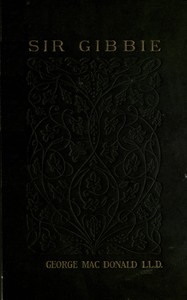
Sir Gibbie — Inside the Classic
(0 User reviews)
1354
Project Gutenberg
2000
Not confirmed
Orphans -- Fiction; Bildungsromans; Boys -- Fiction; Child witnesses -- Fiction; Mute persons -- Fiction; Highlands (Scotland) -- Fiction
Readers of public-domain and historical texts
Project Gutenberg digital edition
en
Edition facts
Words
196,012
Reading time
853 min
Text sections
67
The source record for Sir Gibbie — Inside the Classic measures this digital text at 196,012 words, 14 hr 13 min estimated reading time, and 67 detected text sections.
The text analysis averages about 24.0 words per sentence, while the detected sections provide another way to judge how the source is divided.
Project Gutenberg metadata also associates the work with “Orphans -- Fiction,” connecting these edition facts with the source record’s subject description.
Source:
Project Gutenberg record #2370
This editorial note examines George MacDonald's use of Broad Scots dialogue, vivid descriptions of flood and poverty, and the silent protagonist Gibbie, focusing on authorial choices in diction and narrative voice.
Read the complete public-domain text at its original source.
Read on Project GutenbergGeorge MacDonald's Sir Gibbie opens with a harsh command in Broad Scots: “Come oot o’ the gutter, ye nickum!” The woman’s voice, described as “half-masculine,” immediately establishes a world where dialect marks both character and social standing. MacDonald layers Scots into dialogue while using standard English for narration, a deliberate choice that foregrounds the oral culture of the Scottish Highlands. The opening chapter, titled “The Earring,” hints at a material object that will carry symbolic weight, though the excerpts do not reveal its full significance.
Dialect as Character Marker
MacDonald renders speech phonetically, as when Mr. Duff laments the flood: “what for the Lord sud set doon Bony an’ set up Louy, but what for he sud gar corn grow, an’ syne sen’ a spate to sweem awa wi’ ’t, that’s mair nor mortal man can see the sense o’.” The spelling—sud for should, gar for make, spate for flood—forces the reader to sound out the words, slowing the pace and immersing them in the rural Scots voice. By contrast, the narrator’s prose remains in standard English, creating a tension between the characters’ lived language and the authorial frame. This technique aligns with the catalog subject “Highlands (Scotland) — Fiction,” grounding the story in a specific linguistic geography.
The Silent Protagonist and Narrative Gaps
Gibbie, the orphan boy, is mute—a fact the excerpts confirm through his absence of dialogue. The narrative instead conveys his presence through others’ reactions: Janet “keepin’ them company, an’ haudin’ the yett open” while praying, and the dog Oscar “greitin’ like, an’ luikin’ for ’im.” MacDonald uses silence as a narrative device, forcing the reader to infer Gibbie’s inner life from external cues. The chapter titles—such as “Gibbie’s Calling” and “The Slate”—suggest that communication occurs through non-verbal means, perhaps writing or gesture. This choice challenges the reader to attend to what is unsaid, a subtle authorial strategy that deepens the boy’s mystery.
Flood as Moral and Physical Landscape
The flood description in the excerpts is precise and sensory: “water, yellow brown, here in still expanse or slow progress, there sweeping along in fierce current.” MacDonald anthropomorphizes the landscape—ricks “floating past,” the farm “vanished”—to convey a world in upheaval. Mr. Duff’s theological confusion (“I canna see the guid o’ ’t till onybody”) contrasts with Janet’s quiet faith, embodied in her phrase “haudin’ the yett open” for prayer. The flood is not merely a plot event but a test of belief, rendered through concrete detail rather than abstraction. The repeated word spate (flood) ties the natural disaster to the Scots lexicon, reinforcing the setting’s authenticity.
Recurring Motifs: The Dog and the Gate
Two motifs recur in the excerpts: the dog Oscar and the image of a gate. Oscar, a well-trained sheepdog, is first linked to Gibbie’s safety, then appears “greitin’ like” when the boy is missing. The dog’s behavior becomes a barometer of distress. Meanwhile, Janet’s “picture-periphrase for praying”—holding the gate open—transforms a domestic image into a spiritual metaphor. MacDonald uses such recurring details to build a cohesive symbolic system without overt explanation. The gate, like the earring in the first chapter, suggests thresholds between safety and danger, known and unknown. These motifs reward attentive reading across the novel’s 67 chapters.
Narrative Voice and Authorial Distance
MacDonald’s narrator occasionally steps back to comment on characters’ limitations, as when he notes that Mr. Duff was “almost as ignorant, notwithstanding he was an elder of the church, as any heathen.” This ironic aside reveals the author’s moral perspective without breaking the story’s flow. The narrator also glosses Scots terms indirectly, embedding definitions in context rather than footnotes. This technique respects the reader’s intelligence while ensuring clarity. The overall effect is a narrative voice that is both compassionate and gently critical, guiding interpretation without dictating it.
Readers approaching Sir Gibbie should attend to the interplay between spoken Scots and narrated English, as MacDonald uses dialect to reveal character and community. The silent boy at the center invites speculation; the flood scenes reward close attention to descriptive detail. A glossary of Scots terms is appended to this edition, but the novel itself provides much of the necessary context through repetition and contrast. Let the language guide you.
The rain made Gibbie’s silent world feel closer, each Broad Scots phrase a small flood of its own. I lingered on the grit and tenderness, then found myself wondering what a voiceless character would make of the raw frontier. That same afternoon, I pulled down The Blazed Trail — Themes and Context and thought of lonely men building something from nothing. One book simply handed me the next.
There are no reviews for this eBook.
There are no comments for this eBook.
Reader reflection
Take a moment to reflect on this book
Create a short personal record of your experience with this book.
Your progress
0
/
10
2
How did the book work for you overall?
3
Is this a title you would suggest to others?
4
How demanding did the text feel?
5
How original did the book feel?
6
How would you describe its reading pace?
7
How useful were the ideas in this book?
8
What was the strongest part of the book?
9
What is the main idea you are taking away?
10