R
RSS new | Bamboo Household — Abrasion Prevention
Guest
- Thread Author
- #1
iMold offers 24/7 emergency availability for water damage concerns in Southwest Florida. Mold after a hurricane can become a concern when floodwater, roof leaks, or wind-driven rain leave building materials damp. If water has entered your home, focus first on safety, document what you can, and arrange a prompt assessment rather than guessing what is wet behind walls or under flooring.
Contact iMold for help
Hurricane damage can leave moisture in places that are hard to see. Water may collect at floor level, travel along framing, enter through a roof or window opening, or soak into drywall, insulation, cabinets, and flooring. A room can look mostly dry while hidden materials remain damp. Warm, humid conditions can also slow drying if the home stays closed up or ventilation is limited.
Mold is not proof that a home is unsafe to occupy, and a musty smell alone cannot tell you what is growing or where it started. The practical question is whether moisture remains and which materials need attention. The Centers for Disease Control and Prevention has published guidance about health issues related to mold, mildew, and mud in hurricane- and flood-affected areas. Review its hurricane and flood-related mold information as one public-health reference; it does not replace a site-specific assessment.
Clues can be subtle once the surface water is gone. Swollen trim, warped flooring, bubbling paint, or a musty odor may be reasons to look more closely, but none of these signs alone confirms mold or shows the full extent of moisture. Conversely, a clean-looking surface does not rule out dampness in a cavity or beneath a finish. Avoid treating a single clue as a complete diagnosis; share it with the assessor along with the room’s history.
For Southwest Florida homeowners, the most useful response is measured: avoid disturbing wet or visibly affected materials, keep a record of damage, and learn what needs to dry or be removed. iMold provides water damage restoration and mold remediation services for properties in its service area.
Before cleaning, make sure it is safe to enter and move around the affected area. Follow local emergency instructions and stay away from standing water if there may be electrical hazards, structural damage, or contamination. Do not turn electrical equipment on or off while standing in water. If you are uncertain whether a room is safe, keep people out and contact the appropriate utility, emergency service, or qualified professional.
Each property is different. Water source, duration, building materials, access, and the extent of affected areas influence the appropriate plan. If there is a strong odor, visible growth, or water in concealed spaces, limit disturbance while a qualified person evaluates the area.
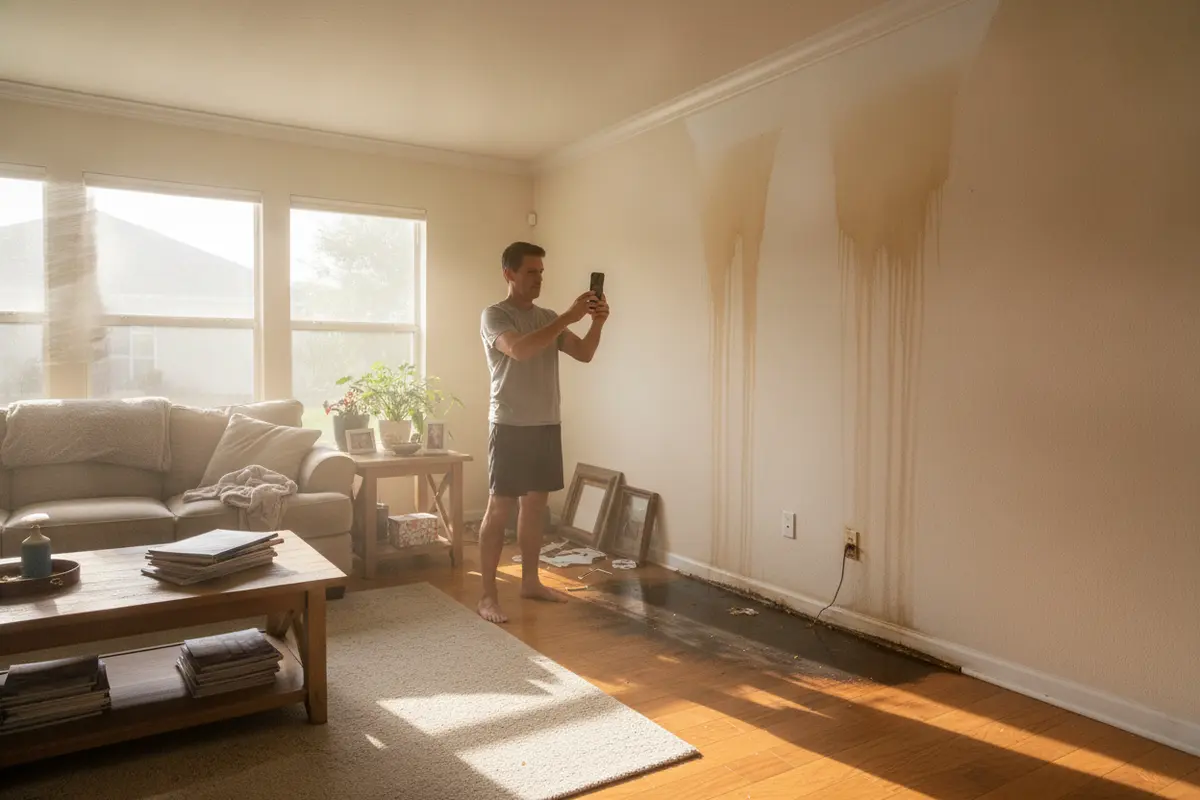
Useful documentation is clear, dated, and organized. Photograph the room from the doorway, then take closer images of affected surfaces and belongings. Include a wider view that helps identify each location. Keep a simple log with the date, the room, what you observed, and any work already performed. Save receipts and copies of communications with your insurer or service providers.
Do not pull up flooring, open walls, or remove building materials just to find the edge of the damage. Disturbing materials can spread dust and debris, and removal may complicate the assessment or insurance record. If materials must be moved for an urgent safety reason, document the condition first if feasible and retain relevant records. Your insurance carrier can explain its documentation process and any requirements that apply to your policy.
Storm water can enter in more than one way. Wind-driven rain may come through a damaged window or roof opening, while floodwater can enter at ground level and affect multiple rooms. A plumbing line or appliance may also leak during or after a storm. Recording what you know about the source can help the assessor understand what questions to investigate. If the source is unknown, say so rather than assuming that every wet area has the same cause.
Make a room-by-room list and distinguish what you observed from what you suspect. For example, note a damp baseboard as an observation, then record that moisture behind the wall is a question for assessment. This simple distinction helps keep conversations with a contractor and your insurer precise. It also creates a useful record if conditions change or additional areas become visible as work proceeds.
iMold’s page about insurance claims and mold remediation can help you understand where restoration discussions fit. For policy coverage, deductibles, and claim decisions, rely on your insurer or qualified insurance professional; coverage depends on the policy and circumstances.
A useful assessment looks beyond the most obvious stain. The professional should discuss the reported water source, affected rooms, visible materials, possible concealed moisture, and the next steps for evaluating and drying the property. Ask how the extent of the affected area will be determined and what observations support the proposed scope.
Testing is not automatically required in every situation. If testing is proposed, ask what question it is intended to answer, who will collect or analyze samples, and how results will guide a decision. Third-party mold testing can provide an independent check when appropriate. iMold explains its approach to restoration and project steps; ask the team to clarify how the plan applies to your particular property.
Drying addresses moisture in materials and the conditions that allowed it to remain. Remediation addresses affected materials and contamination when mold is present and the work calls for it. They may be related parts of a project, but one is not a substitute for the other. A good plan identifies the moisture source, the affected area, and a reasonable sequence for work and verification.
The table is a starting point, not a diagnosis. A qualified professional should explain whether the conditions at your home fit any of these situations and what remains uncertain. In iMold’s mold remediation service information, you can learn more about the service; ask for a written description of the scope before work begins.
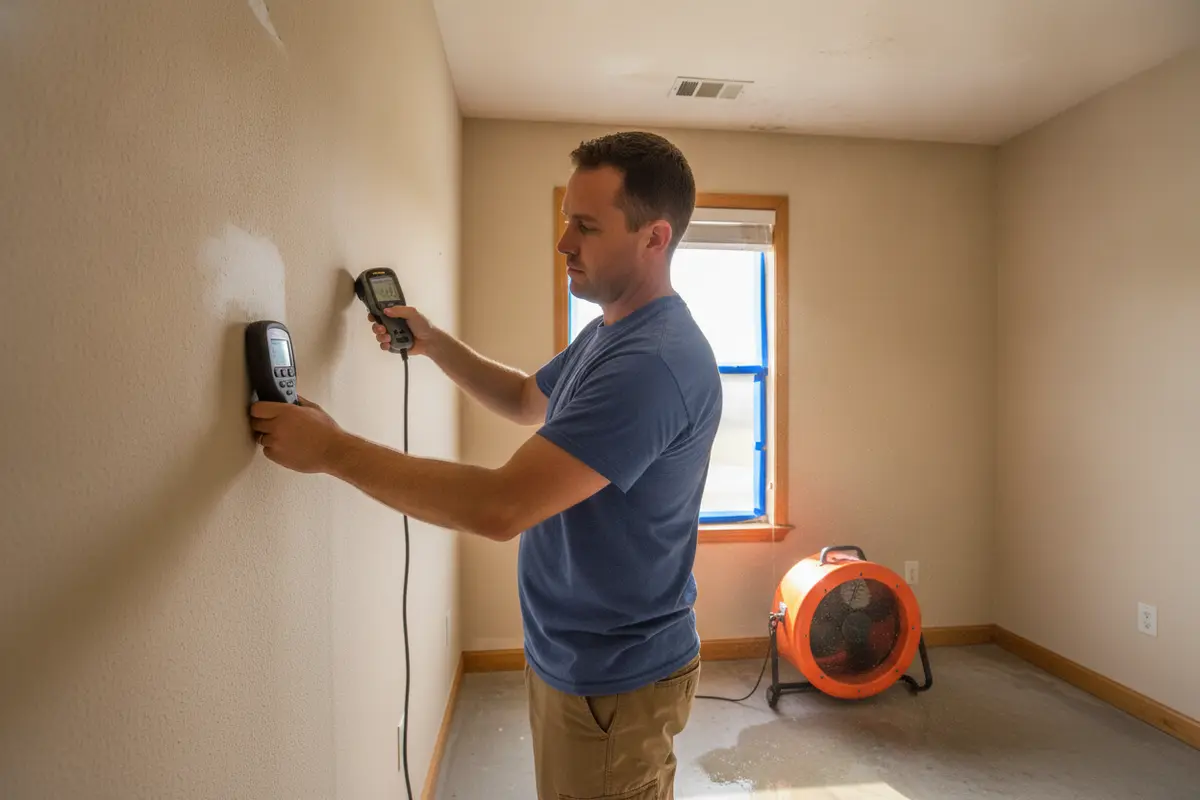
After a widespread storm, homeowners may need to make decisions while managing repairs and insurance questions. Compare plans by clarity and evidence, not by a single phrase or equipment list. A proposal should connect the observations to the proposed work, explain what is included, and identify any assumptions or areas that need further review. It is reasonable to ask how the contractor will communicate discoveries that change the scope. Hidden moisture or damage may become apparent only after access is gained, so find out whether the team will pause, document the finding, and explain the proposed next step. Ask who your point of contact will be and how updates will be shared. You should be able to understand the reason for a task without needing to interpret equipment names or technical shorthand.
Also ask what completion means for each phase. Drying work may have monitoring records, while removal or repair may involve separate documentation and decisions. Clarify whether the estimate includes contents handling, cleanup, or rebuild work, or whether those items are outside its scope. These questions are not a substitute for reading the agreement; they help you compare like with like before authorizing work.
Ask for the work area, tasks, and sequence in writing. Clarify how contents will be protected, what materials may be removed, how moisture monitoring will be documented, and what conditions could change the plan. If reconstruction is expected after mitigation, ask where one phase ends and the next begins. iMold offers restoration work across stages; its services overview is a place to review the types of help available.
For additional context about the company and its local experience, see iMold’s background and customer reviews. Reviews describe other customers’ experiences; they do not predict the outcome of your project. If you are in a nearby community, check the service area list or contact the team to confirm whether your address is served.
Keep the affected area accessible and avoid adding moisture. If power and conditions are safe, follow the advice of your restoration professional about ventilation or equipment. Do not use fans in a way that blows debris from an affected area into other rooms. Do not operate household equipment in a wet area or where electrical safety is uncertain.
Separate dry belongings from wet items only when it is safe to do so. Avoid storing damp items in closed bags or piles where they cannot dry. Keep children and pets out of work zones, and tell the professional about any access constraints or household needs before work starts. Do not mix cleaning products or apply chemicals to unknown materials; some combinations can create hazardous fumes, and surface cleaning alone may not address moisture inside a material.
For practical preparedness information, iMold has a safety and preparedness resource. Its frequently asked questions may also help you identify what to ask, but a property-specific assessment is needed to determine the condition of your home.
Notify your insurer promptly and follow the instructions in your policy. Ask what records or approvals are needed, whether the insurer wants to inspect the property, and how to submit photos, invoices, and estimates. Keep copies of documents and note the date and name or department associated with each conversation.
A restoration company can document observed conditions and describe proposed mitigation work, but the insurer determines coverage under the policy. Do not assume that a particular water source or repair will be covered without confirmation. If you are unsure how to handle an urgent step while the claim is open, ask the insurer and request its guidance in writing when possible. iMold notes that it coordinates with carriers and uses Xactimate in its insurance-related work; discuss what documentation is available for your project directly with the team.
iMold offers no-cost visual mold inspections and estimates. An estimate can help define proposed work, but it is not a promise of insurance coverage. For help starting a conversation, use the contact page.
Address water intrusion as soon as it is safe to do so. The longer materials remain wet, the greater the chance that damage and mold concerns may develop. Safety comes first: do not enter hazardous areas or operate equipment where electrical or structural conditions are uncertain. Arrange a professional assessment if the affected area is extensive, hidden, or difficult to dry.
No. A musty odor can be a reason to investigate, but it cannot identify the material, extent, or source of a problem. A visual review and moisture assessment can help determine what is happening. Ask whether testing would answer a specific question before deciding it is needed.
It depends on the size and location of the affected area, the material, and the water source. Avoid disturbing materials if the area is extensive, concealed, or connected to floodwater or other uncertain contamination. If you have health concerns, consult a medical professional. A restoration professional can assess the property and explain appropriate options.
Not necessarily. Staining can indicate past or current moisture, but it does not by itself establish that mold is present or define the work needed. The source and condition of the material should be evaluated before repairs or surface treatments are chosen.
Share the property address, when and where water entered, what areas appear affected, whether the source is still active, and any immediate safety concerns. Photos can help explain what you observed. You do not need to know the full extent before asking for an assessment.
Request a no-cost visual mold inspection or estimate
After a hurricane, a clear plan starts with safety, careful documentation, and an assessment of moisture and affected materials. iMold provides 24/7 emergency availability and serves homeowners and businesses across Southwest Florida; contact the team to discuss what you are seeing and the next appropriate step.
The post Mold After a Hurricane: What Southwest Florida Homeowners Need to Know appeared first on iMold.
Contact iMold for help
What makes mold a concern after a hurricane?
Hurricane damage can leave moisture in places that are hard to see. Water may collect at floor level, travel along framing, enter through a roof or window opening, or soak into drywall, insulation, cabinets, and flooring. A room can look mostly dry while hidden materials remain damp. Warm, humid conditions can also slow drying if the home stays closed up or ventilation is limited.
Mold is not proof that a home is unsafe to occupy, and a musty smell alone cannot tell you what is growing or where it started. The practical question is whether moisture remains and which materials need attention. The Centers for Disease Control and Prevention has published guidance about health issues related to mold, mildew, and mud in hurricane- and flood-affected areas. Review its hurricane and flood-related mold information as one public-health reference; it does not replace a site-specific assessment.
Clues can be subtle once the surface water is gone. Swollen trim, warped flooring, bubbling paint, or a musty odor may be reasons to look more closely, but none of these signs alone confirms mold or shows the full extent of moisture. Conversely, a clean-looking surface does not rule out dampness in a cavity or beneath a finish. Avoid treating a single clue as a complete diagnosis; share it with the assessor along with the room’s history.
For Southwest Florida homeowners, the most useful response is measured: avoid disturbing wet or visibly affected materials, keep a record of damage, and learn what needs to dry or be removed. iMold provides water damage restoration and mold remediation services for properties in its service area.
What should you do first after storm water enters?
Before cleaning, make sure it is safe to enter and move around the affected area. Follow local emergency instructions and stay away from standing water if there may be electrical hazards, structural damage, or contamination. Do not turn electrical equipment on or off while standing in water. If you are uncertain whether a room is safe, keep people out and contact the appropriate utility, emergency service, or qualified professional.
- Stop additional water if it is safe. If the source is a controllable plumbing leak, shut off the water supply. For roof or exterior openings, do not climb onto a damaged roof or attempt a repair in unsafe conditions. Arrange qualified help.
- Protect people and belongings. Keep children and pets away from wet or damaged areas. Move only items that can be handled safely, and do not carry contaminated or heavy materials through the home.
- Record the condition. Take dated photographs or video of affected rooms and belongings before cleanup, when it is safe. Note where water entered, when you noticed it, and any actions taken.
- Contact your insurer and restoration professional. Ask your carrier how to report the loss and preserve records. If you need emergency help, iMold describes its emergency restoration response and provides a point of contact for next steps.
- Do not conceal the damage. Avoid painting, covering stains, or replacing finishes before the moisture condition is understood. A surface treatment may hide a sign without correcting the source.
Each property is different. Water source, duration, building materials, access, and the extent of affected areas influence the appropriate plan. If there is a strong odor, visible growth, or water in concealed spaces, limit disturbance while a qualified person evaluates the area.
How can you document damage without making it worse?
Useful documentation is clear, dated, and organized. Photograph the room from the doorway, then take closer images of affected surfaces and belongings. Include a wider view that helps identify each location. Keep a simple log with the date, the room, what you observed, and any work already performed. Save receipts and copies of communications with your insurer or service providers.
Do not pull up flooring, open walls, or remove building materials just to find the edge of the damage. Disturbing materials can spread dust and debris, and removal may complicate the assessment or insurance record. If materials must be moved for an urgent safety reason, document the condition first if feasible and retain relevant records. Your insurance carrier can explain its documentation process and any requirements that apply to your policy.
Storm water can enter in more than one way. Wind-driven rain may come through a damaged window or roof opening, while floodwater can enter at ground level and affect multiple rooms. A plumbing line or appliance may also leak during or after a storm. Recording what you know about the source can help the assessor understand what questions to investigate. If the source is unknown, say so rather than assuming that every wet area has the same cause.
Make a room-by-room list and distinguish what you observed from what you suspect. For example, note a damp baseboard as an observation, then record that moisture behind the wall is a question for assessment. This simple distinction helps keep conversations with a contractor and your insurer precise. It also creates a useful record if conditions change or additional areas become visible as work proceeds.
iMold’s page about insurance claims and mold remediation can help you understand where restoration discussions fit. For policy coverage, deductibles, and claim decisions, rely on your insurer or qualified insurance professional; coverage depends on the policy and circumstances.
What should be checked during a moisture assessment?
A useful assessment looks beyond the most obvious stain. The professional should discuss the reported water source, affected rooms, visible materials, possible concealed moisture, and the next steps for evaluating and drying the property. Ask how the extent of the affected area will be determined and what observations support the proposed scope.
- Which rooms and materials appear affected, and which areas still need checking?
- Is there a likely moisture source that needs to be stopped or repaired?
- How will moisture be monitored as drying progresses?
- What items or materials may need removal, and why?
- How will the work area be managed to limit dust and disruption?
- What documentation can you expect to receive?
Testing is not automatically required in every situation. If testing is proposed, ask what question it is intended to answer, who will collect or analyze samples, and how results will guide a decision. Third-party mold testing can provide an independent check when appropriate. iMold explains its approach to restoration and project steps; ask the team to clarify how the plan applies to your particular property.
How do drying and remediation differ?
Drying addresses moisture in materials and the conditions that allowed it to remain. Remediation addresses affected materials and contamination when mold is present and the work calls for it. They may be related parts of a project, but one is not a substitute for the other. A good plan identifies the moisture source, the affected area, and a reasonable sequence for work and verification.
| Situation | Typical focus | Useful question |
|---|---|---|
| Recent clean-water leak or rain intrusion | Find and stop the source, assess damp materials, and determine drying needs | How will moisture be checked over time? |
| Floodwater or water of uncertain origin | Protect occupants, document the condition, and assess affected materials before cleanup | What precautions are appropriate for this water source? |
| Visible growth or persistent dampness | Identify the extent, manage disturbance, and plan appropriate remediation and moisture correction | What is included in the work area and why? |
| Hidden damage suspected behind finishes | Use suitable assessment methods to locate affected materials before setting scope | What evidence supports opening or removing a material? |
The table is a starting point, not a diagnosis. A qualified professional should explain whether the conditions at your home fit any of these situations and what remains uncertain. In iMold’s mold remediation service information, you can learn more about the service; ask for a written description of the scope before work begins.
How can you compare proposed work?
After a widespread storm, homeowners may need to make decisions while managing repairs and insurance questions. Compare plans by clarity and evidence, not by a single phrase or equipment list. A proposal should connect the observations to the proposed work, explain what is included, and identify any assumptions or areas that need further review. It is reasonable to ask how the contractor will communicate discoveries that change the scope. Hidden moisture or damage may become apparent only after access is gained, so find out whether the team will pause, document the finding, and explain the proposed next step. Ask who your point of contact will be and how updates will be shared. You should be able to understand the reason for a task without needing to interpret equipment names or technical shorthand.
Also ask what completion means for each phase. Drying work may have monitoring records, while removal or repair may involve separate documentation and decisions. Clarify whether the estimate includes contents handling, cleanup, or rebuild work, or whether those items are outside its scope. These questions are not a substitute for reading the agreement; they help you compare like with like before authorizing work.
Ask for the work area, tasks, and sequence in writing. Clarify how contents will be protected, what materials may be removed, how moisture monitoring will be documented, and what conditions could change the plan. If reconstruction is expected after mitigation, ask where one phase ends and the next begins. iMold offers restoration work across stages; its services overview is a place to review the types of help available.
For additional context about the company and its local experience, see iMold’s background and customer reviews. Reviews describe other customers’ experiences; they do not predict the outcome of your project. If you are in a nearby community, check the service area list or contact the team to confirm whether your address is served.
What can you do while waiting for an assessment?
Keep the affected area accessible and avoid adding moisture. If power and conditions are safe, follow the advice of your restoration professional about ventilation or equipment. Do not use fans in a way that blows debris from an affected area into other rooms. Do not operate household equipment in a wet area or where electrical safety is uncertain.
Separate dry belongings from wet items only when it is safe to do so. Avoid storing damp items in closed bags or piles where they cannot dry. Keep children and pets out of work zones, and tell the professional about any access constraints or household needs before work starts. Do not mix cleaning products or apply chemicals to unknown materials; some combinations can create hazardous fumes, and surface cleaning alone may not address moisture inside a material.
For practical preparedness information, iMold has a safety and preparedness resource. Its frequently asked questions may also help you identify what to ask, but a property-specific assessment is needed to determine the condition of your home.
How do insurance and restoration discussions fit together?
Notify your insurer promptly and follow the instructions in your policy. Ask what records or approvals are needed, whether the insurer wants to inspect the property, and how to submit photos, invoices, and estimates. Keep copies of documents and note the date and name or department associated with each conversation.
A restoration company can document observed conditions and describe proposed mitigation work, but the insurer determines coverage under the policy. Do not assume that a particular water source or repair will be covered without confirmation. If you are unsure how to handle an urgent step while the claim is open, ask the insurer and request its guidance in writing when possible. iMold notes that it coordinates with carriers and uses Xactimate in its insurance-related work; discuss what documentation is available for your project directly with the team.
iMold offers no-cost visual mold inspections and estimates. An estimate can help define proposed work, but it is not a promise of insurance coverage. For help starting a conversation, use the contact page.
Frequently Asked Questions
How soon should I address wet materials after a hurricane?
Address water intrusion as soon as it is safe to do so. The longer materials remain wet, the greater the chance that damage and mold concerns may develop. Safety comes first: do not enter hazardous areas or operate equipment where electrical or structural conditions are uncertain. Arrange a professional assessment if the affected area is extensive, hidden, or difficult to dry.
Can I tell whether mold is present by smell alone?
No. A musty odor can be a reason to investigate, but it cannot identify the material, extent, or source of a problem. A visual review and moisture assessment can help determine what is happening. Ask whether testing would answer a specific question before deciding it is needed.
Should I clean visible mold myself?
It depends on the size and location of the affected area, the material, and the water source. Avoid disturbing materials if the area is extensive, concealed, or connected to floodwater or other uncertain contamination. If you have health concerns, consult a medical professional. A restoration professional can assess the property and explain appropriate options.
Does a stain mean I need mold remediation?
Not necessarily. Staining can indicate past or current moisture, but it does not by itself establish that mold is present or define the work needed. The source and condition of the material should be evaluated before repairs or surface treatments are chosen.
What should I have ready when I contact a restoration company?
Share the property address, when and where water entered, what areas appear affected, whether the source is still active, and any immediate safety concerns. Photos can help explain what you observed. You do not need to know the full extent before asking for an assessment.
Request a no-cost visual mold inspection or estimate
Get clear answers about your property
After a hurricane, a clear plan starts with safety, careful documentation, and an assessment of moisture and affected materials. iMold provides 24/7 emergency availability and serves homeowners and businesses across Southwest Florida; contact the team to discuss what you are seeing and the next appropriate step.
The post Mold After a Hurricane: What Southwest Florida Homeowners Need to Know appeared first on iMold.