1

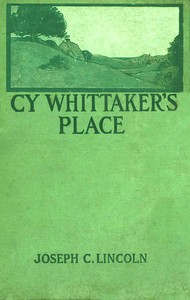
Cy Whittaker's Place — Background and Themes
(0 User reviews)
638
Project Gutenberg
2006
Not confirmed
Man-woman relationships -- Fiction; Massachusetts -- Fiction; Cape Cod (Mass.) -- Fiction; Adoption -- Fiction
Readers of public-domain and historical texts
Project Gutenberg digital edition
en
Edition facts
Words
93,633
Reading time
408 min
Text sections
11
This digital edition of Cy Whittaker's Place — Background and Themes is described by source-level measurements including 93,633 words, 6 hr 48 min estimated reading time, and 11 detected text sections.
The text analysis averages about 11.9 words per sentence, while the detected sections provide another way to judge how the source is divided.
Project Gutenberg metadata also associates the work with “Man-woman relationships -- Fiction,” connecting these edition facts with the source record’s subject description.
Source:
Project Gutenberg record #3281
An editorial note on Joseph C. Lincoln's 'Cy Whittaker's Place,' examining how the catalog subjects of romance and adoption relate to the actual excerpts, which focus on town politics, boarding-house life, and a tense confrontation.
Read the complete public-domain text at its original source.
Read on Project GutenbergThe catalog subjects for Cy Whittaker's Place list man-woman relationships, adoption, and Cape Cod fiction. Yet the opening chapter dwells not on romance but on the precise day of a selectmen's meeting, with characters debating whether it was Tuesday or Wednesday. Keturah Bangs remembers fried cod cheeks and cabbage; Asaph Tidditt's record says Tuesday, but May 10 fell on Wednesday. This comic wrangling over municipal trivia sets the tone more than any love plot.
The excerpts show a story anchored in Bayport's civic life—town meetings, boarding-house routines, and the weight of public reputation. Captain Cy Whittaker emerges not as a suitor but as a protector, intervening in a confrontation with a man named Smith. The catalog's emphasis on adoption and romance may reflect the full novel, but the evidence here points to a community drama where personal conflicts play out in front of the whole town.
Civic Comedy and Calendar Confusion
The novel opens with a dispute over what day it is. The town clerk's record says Tuesday, but the date was actually Wednesday. Keturah Bangs insists on Tuesday because she served fried cod cheeks and cabbage, her regular Tuesday meal. Bailey Bangs, her husband, cannot remember—he was late to dinner and received a "broadsides" from his wife. This small disagreement reveals how the town's identity is built on shared, fallible memory. The clock presented by the Honorable Heman Atkins marks quarter past twelve, but even that official timepiece cannot settle the argument. Lincoln uses this confusion to establish Bayport as a place where official records and personal recollections constantly rub against each other, producing humor rather than resolution.
Confrontation and Character
In a later excerpt, Captain Cy confronts a man called Smith, who has been threatening him. The scene is tense: Cy drops the schoolmistress's arm, strides back, and whispers that he would "kill you like a dog" if Smith enters his house. The threat is specific and physical, grounded in Cy's experience in South America. Yet the captain immediately regrets his anger, having spent the day "hatin' myself for the way I've acted." This duality—bluster followed by self-reproach—defines Cy more than any romantic inclination. The schoolmistress, Miss Dawes, admits she was prejudiced against him, having heard he got her the teaching job for selfish reasons. She offers to shake hands, and Cy hesitates, aware that his troubles are not over. The exchange is about trust and reputation, not courtship.
Town Meeting as Stage
Chapter XII is titled "Town-Mectin'" and opens with Sylvanus Cahoon declaring it will be "a meMOriable town meetin'." The chapter heading signals that the novel's central drama may be public and political rather than private. The excerpts do not reveal what happens at the meeting, but the buildup suggests that Cy's conflict with Smith will become a matter for the whole community. The catalog subject "Man-woman relationships" is almost invisible here; instead, the evidence shows a story where a man's standing in a small town is tested through civic institutions. The boarding house, the selectmen's meeting, and the town hall are the real stages, not a domestic interior.
Readers approaching Cy Whittaker's Place through its catalog subjects may expect a romance or adoption plot. The excerpts suggest a different emphasis: a community comedy with a strong male lead whose troubles are public and political. Pay attention to the minor characters—Keturah Bangs, Asaph Tidditt, Sylvanus Cahoon—who carry the town's voice. The novel's humor lies in their precise, fussy observations, not in grand gestures. Let the calendar confusion and the boarding-house details guide your reading.
Reading about the boarding-house tension in Cy Whittaker’s Place brought back my grandmother’s kitchen table, where arguments dissolved into pie. That same ache of stubborn folks softening around the edges filled Thankful’s Inheritance — Inside the Classic — Thankful’s Inheritance — Inside the Classic — and I sat quiet, remembering how a place can hold more than its walls ever admit.
There are no reviews for this eBook.
There are no comments for this eBook.
Reader reflection
Record your reading impressions
A brief reflection can help important ideas stay with you longer.
Your progress
0
/
10
2
How much did you enjoy the reading experience?
3
Would you recommend this book to another reader?
4
How demanding did the text feel?
5
Did you relate to its people, ideas, or situations?
6
Did you gain anything practical from the text?
7
What did you think about the pace?
8
Which element worked best for you?
9
Which lesson or insight stayed with you?
10