
Encyclopaedia Britannica, 11th Edition, "Banks" to "Bassoon" by Various

(4 User reviews)   465
By Jason Bauer Posted on Jan 12, 2026
In Category - Satire
Various Various
English
Have you ever wondered what people knew a century ago? I just spent a weekend with the 1911 Britannica, specifically the volume covering everything from Banks to Bassoons. It's not a novel, but it's full of stories. You get the history of banking told with Victorian certainty, detailed plans for building a banjo, and an entry on 'barbarism' that reveals more about the writer's world than the subject. The real mystery isn't in the facts—it's in reading between the lines to discover the mindset of an era on the brink of world war, still utterly confident in its own knowledge. It’s a fascinating, sometimes jarring, time capsule.
Share

Read "Encyclopaedia Britannica, 11th Edition, "Banks" to "Bassoon" by Various" Online

This book is available in the public domain. Start reading the digital edition below.

START READING FULL BOOK
Instant Access    Mobile Friendly

Book Preview

A short preview of the book’s content is shown below to give you an idea of its style and themes.

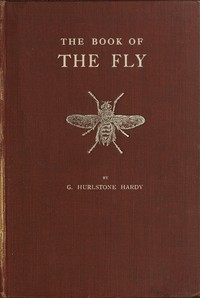
NOTE. Fig. 4 has been found to be not available for this edition. ------------------------------------------------------------------------ PREFACE The dangers of house-flies to the health of the community have come into such recent prominence that the appearance of Major Hurlstone Hardy's book should fill a want. It is written lucidly and clearly, yet in that popular style which is so frequently lacking in scientific works. This is a great advantage. Too often scientists are prone to bring out works couched in terms which cannot be understood by an interested public that is not versed in technical terms. Thus matter which is of the greatest general importance is passed unread by many, and is, in consequence, not acted upon. Major Hardy has a knowledge of these deadly insects which, in my opinion, is unsurpassed, because he has the personal experience of practical experiment combined with the instincts of the naturalist. The result is an account both accurate and interesting which should prove of the greatest value. The discovery of the transmission of disease by mosquitoes required the passage of a decade before its essentials were grasped by the public mind; that of the prevention of small-pox required a century. But the dangers of house-flies is rapidly becoming known in consequence of the popular literature, which is growing, describing the details of the lives of these loathly creatures. In this way only can such knowledge be spread—a knowledge which must become general before flies and the maladies they convey can be generally and satisfactorily dealt with. It is of little use to make great discoveries and then to hide them on the musty bookshelves of learned societies. Instead, they should be adapted to practical purposes applied for the good of suffering humanity; and the best way to do this is to bring out well-written, interesting, and easily read books of this kind, so that all who run may read and their readings endure. This book should assist much to accomplish this end. Thus we may look forward confidently to the day when house-flies, and the diseases they carry, are things of the past. The "Book of the Fly" must take its place in the history of the events which are to lead up to the winning of that goal. HALFORD ROSS (_of the John Howard McFadden Researches at the_ _Lister Institute of Preventive Medicine_). ------------------------------------------------------------------------ THE BOOK OF THE FLY CHAPTER I THE HOUSE-FLY, A PRODUCT OF HUMAN INSANITATION With the present day zeal for popularising interest in common things (called nature study) there has arisen the demand for knowledge practically useful and thoroughly up-to-date, yet in a form free from much of the technical terminology and treatment which are essential in the student's more fully developed scientific handbook. The "House-fly" is a fit subject for a simplified study of this kind, and the present booklet is an attempt to afford information very different to that of the "popular" works, which only were accessible to the writer's hands between fifty and sixty years ago; the writers of those old books all followed the lead of the reverend and learned contributors to the famous and monumental "Bridgwater Treatises." "The Wonders of Nature explained," "Humble Creatures" (a study of the earth-worm and the house-fly, in popularised language), "The Treasury of Knowledge," "Simple Lessons for Home Use," were the kind of cheaper works in touch with a past generation; these latter and other later well-intended publications will now be found to be somewhat deficient or even a little misleading entomologically; they abounded in pious sentimentality and mostly attempted an aggravatingly grandiose literary style, but all have rather failed...

This is a limited preview. Download the book to read the full content.

This isn't a book with a plot in the traditional sense. It's a slice of the monumental 11th Edition of the Encyclopaedia Britannica, published in 1911. The 'story' is the ambitious project itself: to capture the sum of human knowledge from the perspective of the early 20th century. You travel alphabetically from financial institutions (Banks) to musical instruments (Bassoon), with stops for barbarians, barometers, baseball, and the history of bathing. Each entry is a self-contained article, written by an expert of the day with the authority and style of its time.

Why You Should Read It

Reading this is like having a conversation with a brilliant, slightly pompous, and fascinatingly dated professor. The prose is confident and detailed, but what hooked me were the glimpses of a vanished world. The entry on 'Barracks' casually discusses colonial military life. The definition of 'Beauty' is a philosophical treatise. You see what they valued, what they misunderstood, and their unshakable belief in progress. It’s history written in real-time, before two world wars changed everything. It makes you think about what our own reference works will say about us in 100 years.

Final Verdict

Perfect for history buffs, trivia lovers, and anyone with a strong sense of curiosity. Don't read it cover-to-cover; dip in and out. It’s a book for the bedside table or a lazy Sunday afternoon. If you enjoy primary sources and seeing how people actually thought and wrote, this volume is a uniquely rich and accessible portal to the past. Just be prepared for some occasionally outdated—and sometimes uncomfortable—viewpoints. That’s part of its power.


📢 Legal Disclaimer

No rights are reserved for this publication. Use this text in your own projects freely.

Susan Roberts
4 months ago

A fantastic discovery, it serves as a poignant reminder of the human condition. This deserves far more attention.

Donald Wilson
3 months ago

I picked his up late one night and the content strikes a great balance between detail and readability. I appreciate the effort put into this.

Amanda Anderson
1 month ago

It’s rare that I write reviews, but the author demonstrates strong mastery of the topic. This made complex ideas feel approachable.

Donald Garcia
4 months ago

As a long-time reader of this genre, the plot twists are genuinely surprising without feeling cheap or forced. This book will stay with me for a long time.

3.5
3.5 out of 5 (4 User reviews )

Add a Review

Your Rating *
There are no comments for this eBook.
You must log in to post a comment.
Log in

Related eBooks