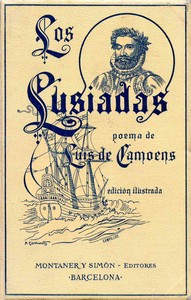
Los Lusíadas: Poema épico en diez cantos by Luís de Camões

(4 User reviews)   462
By Jason Bauer Posted on Jan 12, 2026
In Category - Satire
Camões, Luís de, 1524?-1580 Camões, Luís de, 1524?-1580
Spanish
Ever wondered what it was like to be on one of those tiny wooden ships sailing into the complete unknown? Luís de Camões's 'The Lusiads' isn't just a poem about Vasco da Gama's voyage to India. It's a wild, myth-soaked adventure where sea monsters attack, pagan gods scheme from Mount Olympus, and the spirit of Portugal itself cheers from the sidelines. It's the ultimate national epic, but it's also a surprisingly human story about ambition, fear, and the staggering cost of discovery. Forget dry history—this is a thunderous, dramatic, and sometimes heartbreaking ride.
Share

Read "Los Lusíadas: Poema épico en diez cantos by Luís de Camões" Online

This book is available in the public domain. Start reading the digital edition below.

START READING FULL BOOK
Instant Access    Mobile Friendly

Book Preview

A short preview of the book’s content is shown below to give you an idea of its style and themes.

NOTA DE TRANSCRIPCIÓN * En el texto las cursivas se muestran entre _subrayados_ y las versalitas como MAYÚSCULAS. * Los errores de imprenta han sido corregidos. * Se ha respetado la ortografía original, normalizándola a la grafía de mayor frecuencia. * Las páginas en blanco han sido eliminadas. LOS LUSÍADAS [Ilustración: Burger, del. Bickel, Neumann, sc. LUIS DE CAMOENS] LUIS DE CAMOENS LOS LUSÍADAS POEMA ÉPICO EN DIEZ CANTOS TRADUCIDO EN VERSO CASTELLANO DEL PORTUGUÉS POR LUIS GÓMEZ DE TAPIA NUEVA EDICIÓN ILUSTRADA BARCELONA —— MONTANER Y SIMÓN, EDITORES CALLE DE ARAGÓN, NÚM. 255 1913 ES PROPIEDAD _LOS LUSÍADAS_ _PREFACIO_ _Para esta edición se ha elegido la notable traducción que del inmortal poema de Camoens hizo en verso, en el año de 1580, el maestro Luis Gómez de Tapia, esmeradamente corregida ahora._ _Luis de Camoens nació en 1524, del oficial de marina Simón Vas de Camoens y doña Ana de Sa y Macedo, dama de ilustre prosapia. Recibió una esmerada educación, y, terminados sus estudios en la Universidad de Coimbra, volvió a Lisboa cuando contaba unos veinte años, y contrajo valiosas amistades._ _Desterrado a Ribatejo por los años de 1545 a 1550, a causa de su ardiente pasión por Catalina de Ataide, hermana de don Antonio, favorito de Juan III, pasó luego al África con las tropas portuguesas, corrió serios peligros y perdió el ojo derecho en un encuentro con los moros._ _Vuelto a Lisboa en 1552, y combatida su alma por graves sinsabores, partió el año siguiente para las Indias orientales, con el humilde título de escudeiro de la flota de Fernando Álvarez Cabral._ _Dió pruebas de gran bravura en varias expediciones y combates. El gobernador Barreto, sintiéndose herido por una sátira de Camoens, que desde su juventud cultivaba la poesía, lo desterró a las factorías de Macao, recientemente fundadas en las costas de China._ _Los tres años que duró su destierro en este país parecen haber sido los más fecundos de su vida. Allí dió las últimas pinceladas a su obra capital, empezada, como se supone, en 1547._ _De regreso en Lisboa en 1570, después de dieciséis años de ausencia, preparó la publicación de su gran poema que vió la luz en 1572, siendo tal su popularidad, que hubo que reimprimirlo dos veces más en el mismo año._ _Sin embargo, la tradición supone al poeta sumido en tal miseria, que sólo a la caridad de uno que había sido su esclavo debió el necesario alimento en los últimos años de su vida, y uno de sus contemporáneos afirma que no tenía en el lecho de muerte una mala manta que le defendiera del frío._ _Su entierro se verificó en la iglesia de Santa Ana (1579), y sólo al cabo de dieciséis años se puso un epitafio en su tumba._ _En_ LOS LUSÍADAS, _Camoens cantó la historia entera de Portugal, uniéndola por medio de narraciones intercaladas en la acción del poema a los viajes y descubrimientos hechos por los portugueses, los_ lusitanos, _bajo la dirección del gran Vasco de Gama en el año de 1497 doblando el cabo de Buena Esperanza_. _Se componen de diez cantos._ _Júpiter reúne en asamblea a los dioses del Olimpo y les recuerda las expediciones de los antiguos lusitanos, la reciente gloria de los portugueses en sus empeños contra los moros, les señala los bajeles de Vasco de Gama bordeando las costas de África, y muéstrase favorable a tan valeroso navegante._ _Los dioses se dividen, y mientras Baco, temeroso de ver eclipsado su gran poderío en la India, se declara contra ellos, Venus y Marte los protegen y envían como mensajero a Mercurio para...

This is a limited preview. Download the book to read the full content.

So, what's this nearly 500-year-old poem actually about? At its heart, it follows Vasco da Gama and his crew as they attempt the impossible: sailing from Portugal around Africa to India. But Camões doesn't just give us a logbook. He throws in Greek gods like Bacchus (who tries to wreck the voyage) and Venus (who protects the sailors), terrifying storms, and encounters with new cultures. It's part travelogue, part fantasy, and all epic spectacle.

Why You Should Read It

Look, it's a challenging read, but it's worth it. The magic isn't just in the monsters and gods; it's in the quiet moments. You feel the crew's homesickness, their terror in a storm, and their awe at seeing new stars. Camões was a traveler himself, and he packs the poem with this gritty, firsthand feel. It’s a celebration of human curiosity and grit, but it doesn't shy away from the darker side of exploration either. You get the glory and the doubt, all wrapped up in some of the most beautiful Portuguese ever written.

Final Verdict

This is for the adventurous reader. If you love Homer's 'Odyssey,' grand historical tales, or stories that mix real history with wild mythology, you'll find a lot to love. Grab a translation with good notes (the references need some explaining!), pour a glass of something strong, and let yourself be swept away. It's a foundational text, but more importantly, it's a thrilling story that still feels alive.


🏛️ Public Domain Notice

This book is widely considered to be in the public domain. Share knowledge freely with the world.

Amanda Wright
1 month ago

After hearing about this multiple times, the explanations are structured in a clear and logical manner. This sets a high standard for similar books.

Lucas Sanchez
3 months ago

After years of reeading similar books, the depth of research presented here is truly commendable. It exceeded all my expectations.

Andrew Wilson
2 months ago

I picked this up late one night and it manages to explain difficult concepts in plain English. A valuable addition to my digital library.

Edward Taylor
5 months ago

At first I wasn’t convinced, but the interplay between the protagonists drives the story forward beautifully. I’ll definitely revisit this in the future.

4.5
4.5 out of 5 (4 User reviews )

Add a Review

Your Rating *
There are no comments for this eBook.
You must log in to post a comment.
Log in

Related eBooks