Colección de Documentos Inéditos Relativos al Descubrimiento, Conquista…

(4 User reviews)   566
By Jason Bauer Posted on Jan 12, 2026
In Category - Comedy Writing
Spanish
Okay, hear me out. You know all those grand stories about Columbus and the conquistadors? This book is the messy, unfiltered backstage pass. It's not a single story but a massive collection of letters, reports, and official documents from the Spanish archives, all written as the 'discovery' of the Americas was actually happening. The real conflict here isn't in a plot—it's in the raw clash between the official version of events and the chaotic, often brutal reality on the ground. Reading these pages feels like eavesdropping on history's most consequential, and troubling, board meeting. It’s history without the polish, and it’s absolutely gripping.
Share

Read "Colección de Documentos Inéditos Relativos al Descubrimiento, Conquista…" Online

This book is available in the public domain. Start reading the digital edition below.

START READING FULL BOOK
Instant Access    Mobile Friendly

Book Preview

A short preview of the book’s content is shown below to give you an idea of its style and themes.

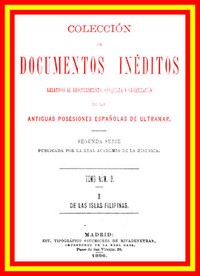
—Los errores obvios de impresión y puntuación han sido corregidos. —Se ha mantenido la acentuación del libro original, que difiere notablemente de la utilizada en español moderno. —Las letras escritas arriba han sido figuradas como a^b. COLECCIÓN DE DOCUMENTOS INÉDITOS DE ULTRAMAR. COLECCIÓN DE DOCUMENTOS INÉDITOS RELATIVOS AL DESCUBRIMIENTO, CONQUISTA Y ORGANIZACIÓN DE LAS ANTIGUAS POSESIONES ESPAÑOLAS DE ULTRAMAR. SEGUNDA SERIE PUBLICADA POR LA REAL ACADEMIA DE LA HISTORIA. TOMO NÚM. 2. I DE LAS ISLAS FILIPINAS. MADRID: EST. TIPOGRÁFICO «SUCESORES DE RIVADENEYRA», IMPRESORES DE LA REAL CASA, Paseo de San Vicente, 20. 1886. PRÓLOGO. Cual montañas que por más elevadas va avistando el navegante, y por la especial disposición de ellas en la costa le marcan el mejor rumbo para entrar en el puerto de su destino, se destacan de las expediciones marítimas por el Poniente, después del descubrimiento del nuevo mundo, tres figuras separadas en el tiempo y desiguales en magnitud: la una terminando la estela de sus exploraciones en los territorios más importantes que aislaban las ondas vírgenes del Pacífico; la otra dándoles el nombre con que la posteridad habría de conocerlos; la tercera ampliando el descubrimiento y asegurando la conquista, y las tres marcando al historiador los términos para entrar en la región que enlaza sus jornadas. Magallanes, Villalobos y Legazpi abren, pues, el primer período de la Historia del descubrimiento y conquista de las Islas Filipinas. No quiere esto decir que todos los sucesos de las expediciones capitaneadas por los dos primeros sean antecedentes obligados del asunto, ni que no haya alguno incidentalmente relacionado en las intermedias de Loaysa y de Álvaro de Saavedra Cerón. Sólo se da á entender que exceptuando los esencialísimos de las dos primeramente nombradas, y si se quiere los incidentales de las segundas, desarrollados en la región á que el asunto se contrae, importan unos y otros, más que á la historia de Filipinas, á la concreta de las Molucas, y sobre todo á la especial de los viajes hacia el Poniente, que tanta gloria dieron á la Corona de Castilla, tanta luz á la Geografía y Cosmografía, y tanto y tan merecido renombre á Juan Sebastián del Cano. Como quiera que sea, publicadas desde el primer tercio del siglo actual todas aquellas expediciones al Maluco; conocidas también las intentadas y no realizadas hacia el Poniente, cumple sacar ahora á luz los papeles, en su gran mayoría inéditos, que prepararon la de Villalobos; deparándoles así tal circunstancia su lugar más oportuno, y al libro su mejor comienzo con una expedición que por nacer en ella el nombre de la región á que se refiere, ser limitado su destino respecto al de las anteriores y constituir un antecedente necesario á la de Legazpi, es la llamada á abrir sus primeras páginas. Aunque la publicación que en la Colección de Indias se hizo de las relaciones de García de Escalante Alvarado y Fray Jerónimo de Sanctiesteban sobre este viaje desflora en cierto modo el asunto y obliga á un sucinto reextracto como medio de evitar la consulta, deja toda su originalidad á la parte interna, tan importante ó más que la externa, de que es necesario complemento, y siempre de estudio más útil por su mayor y más vasta aplicación. De aquí que no se omitan papeles considerados antes secundarios, y estimados en su justo valor por la crítica moderna, que entiende no se puede estudiar sin ellos la parte más trascendental de la historia. Por tal motivo aparecerán capitulaciones íntegras, instrucciones detalladas, ordenanzas particulares, proyectos sobre derrotas, dictámenes de disentimiento, reales cédulas, cartas y provisiones, de lectura ciertamente árida y fatigosa,...

This is a limited preview. Download the book to read the full content.

Forget a traditional narrative. Colección de Documentos Inéditos is a monumental archive in book form. It compiles hundreds of firsthand accounts: royal decrees from Spain, desperate letters from explorers, logistical reports from fledgling colonies, and legal testimonies. There is no single plot, but a sprawling, real-time record of contact, conquest, and administration.

The Story

There isn't a story in the usual sense. Instead, you jump from a captain's frantic account of a storm at sea to a bureaucrat's dry inventory of supplies sent to Hispaniola. You read Columbus defending his actions to the Crown, and later, officials debating the treatment of indigenous people. The 'story' is the cumulative, often contradictory picture of an empire trying to understand and control a world it just stumbled upon.

Why You Should Read It

This is for when you're tired of history books telling you what happened and you want to see how it happened, in the words of the people who were there. The dryness of a shipping manifest can be suddenly shattered by a line describing a violent encounter. The disconnect between the lofty orders from Europe and the gritty reality in the Americas is startling. It makes the past feel immediate, complicated, and deeply human—for better and often, for worse.

Final Verdict

Perfect for history buffs who want to move beyond summaries and get their hands on the primary sources. It’s also fantastic for anyone fascinated by how stories are built and how the raw material of events gets shaped into the history we know. It’s not a light read, but dipping into a few documents at a time is an incredibly rewarding way to connect directly with a pivotal moment in time.


📚 Legal Disclaimer

This title is part of the public domain archive. Use this text in your own projects freely.

Noah Mitchell
4 months ago

I needed a solid reference and the author anticipates common questions and addresses them well. One of the best books I've read this year.

James Johnson
4 months ago

I was searching for something reliable and the narrative structure is incredibly compelling and well-thought-out. An excellent read overall.

Andrew Williams
5 months ago

I have to admit, the author anticipates common questions and addresses them well. I learned so much from this.

Sandra Young
2 months ago

During my studies, I found that the organization of topics is intuitive and reader-friendly. It was exactly what I needed right now.

4.5
4.5 out of 5 (4 User reviews )

Add a Review

Your Rating *
There are no comments for this eBook.
You must log in to post a comment.
Log in

Related eBooks